
 medshi8
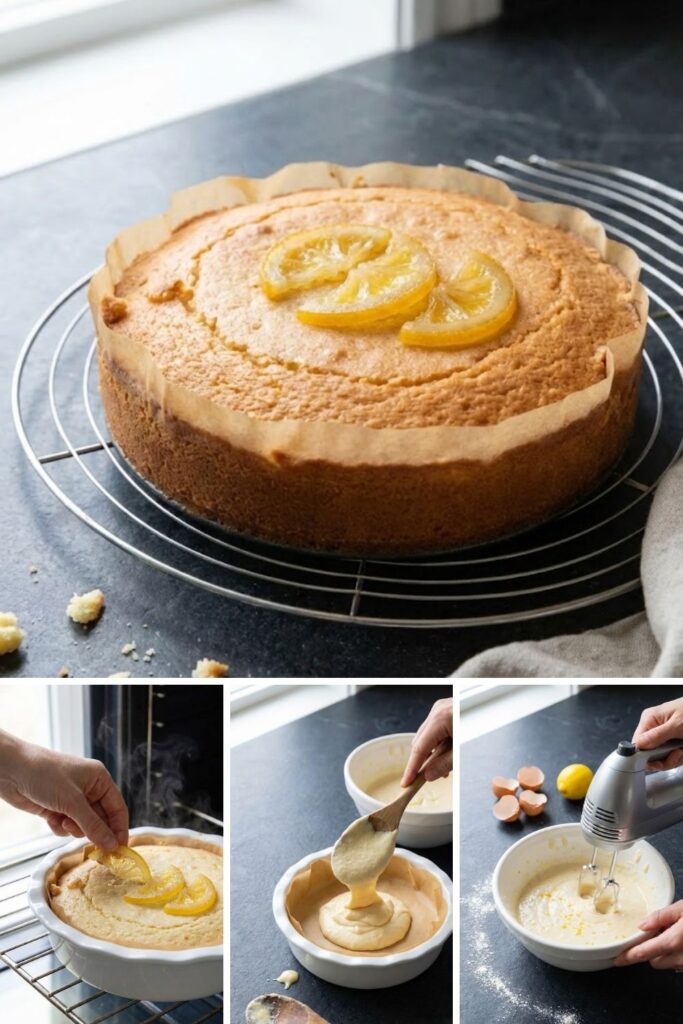
 This firm, golden Mary Berry Madeira Cake is made with ground almonds, fresh lemon zest, and candied peel, ready in just under an hour and a half. The batter rises slowly to create a signature domed top with a natural crack, marking it as a true classic. I love baking this for afternoon tea because the sturdy crumb holds its shape perfectly when dunked.
Why This Classic Works
I used to find Madeira cake a bit dry compared to a Victoria sponge, but Mary Berry’s addition of ground almonds completely changes the texture. The almonds introduce a subtle nuttiness and, more importantly, retain moisture, ensuring the cake stays tender for days rather than drying out overnight. It creates that perfect close-textured crumb that feels substantial without being heavy.
My biggest lesson with this recipe was trusting the “all-in-one” method. While traditional Madeira recipes call for laborious creaming of butter and sugar, Mary’s approach dumps everything into the bowl at once. It feels like cheating, but as long as your butter is truly soft, it produces a better rise and a more uniform crumb every time.
Mary Berry Madeira Cake Ingredients
- 175g softened butter: It must be very soft for the all-in-one method to work without lumps.
- 175g caster sugar: Golden caster sugar adds a nice colour, but white works perfectly.
- 225g self-raising flour: Note that this is more flour than a standard sponge, giving the cake its firm structure.
- 50g ground almonds: The secret ingredient for moisture and shelf-life.
- 4 large eggs: Use room temperature eggs to prevent the batter from curdling.
- Zest of 1 lemon: Finely grated for a fresh citrus scent.
- 3 slices candied citron peel: Optional, but essential for the traditional look.

How To Make Mary Berry Madeira Cake
- Prep the Tin: Preheat your oven to 180°C (160°C Fan/Gas 4). Grease a deep 18cm (7in) round cake tin or a 900g (2lb) loaf tin and line the base and sides with baking parchment.
- Mix the Batter: Place the softened butter, caster sugar, self-raising flour, ground almonds, eggs, and lemon zest into a large mixing bowl. Using an electric mixer, beat everything together for about 1 minute until the batter is smooth and pale. Do not overbeat.
- Fill the Tin: Spoon the mixture into your prepared tin and smooth the surface with the back of a spoon or a spatula.
- First Bake: Bake in the centre of the oven for 40 minutes. The cake should be rising and forming a crust.
- Add the Peel: Carefully remove the cake (or just slide the shelf out) and gently place the candied peel slices on top of the cake. Return to the oven immediately.
- Final Bake: Bake for another 20 minutes (60 minutes total) until the cake is well-risen, golden, and a skewer inserted into the centre comes out clean.
- Cool: Leave the cake in the tin for 15 minutes to firm up, then turn out onto a wire rack to cool completely.
Recipe Tips
- The Signature Crack: Don’t panic if your cake cracks on top—this is actually the hallmark of a good Madeira cake! It shows the batter was thick enough to rise slowly.
- Don’t Open Too Early: If you open the oven before the 35-40 minute mark to add the peel, the cake may sink. Wait until a crust has formed.
- Soft Butter is Key: Since you aren’t creaming the butter and sugar separately, your butter must be soft enough to blend instantly with the flour and eggs. If it’s hard, you’ll get lumps of butter in the baked cake.
- Preventing Browning: If the top looks like it’s browning too fast during the final 20 minutes, cover it loosely with a piece of foil.
What To Serve With Madeira Cake
This cake is the ultimate partner for a cup of tea or coffee because its firm texture withstands dunking without falling apart. For a dessert option, serve a thick slice with a dollop of clotted cream and some sharp raspberry jam to cut through the buttery richness.

How To Store
Madeira cake keeps incredibly well and often tastes better the next day as the almond oils settle. Store it in an airtight container at room temperature for up to 5 days. You can also freeze the cooled cake, wrapped well in foil, for up to 3 months.
FAQs
- Why is my Madeira cake dry?
Dryness usually comes from overbaking. Because this recipe has more flour than a standard sponge, it can dry out if left in the oven too long. Check it exactly at the 55-minute mark. - Can I leave out the ground almonds?
The almonds are crucial for moisture. If you must omit them due to allergies, replace them with an equal weight of flour, but add a tablespoon of milk to loosen the batter. - Why did my candied peel sink?
The peel sank because the batter was still too liquid when you added it. Make sure the cake has baked for at least 35-40 minutes and has a firm-ish top before placing the peel. - Can I use a loaf tin instead of a round tin?
Yes, a 900g (2lb) loaf tin works perfectly. The baking time remains roughly the same, but keep an eye on it from 50 minutes onwards.
Nutrition
- Calories: 385 kcal
- Total Fat: 22g
- Saturated Fat: 11g
- Cholesterol: 125mg
- Sodium: 210mg
- Total Carbohydrate: 42g
- Protein: 7g

Mary Berry Madeira Cake
8
servings20
minutes1
hour50
minutes2
hours10
minutesClassic Mary Berry Madeira Cake with a close, buttery crumb and a hint of citrus. Made with ground almonds for extra moisture and finished with traditional candied peel, this sturdy cake is ready in 1 hour 30 minutes. Perfect for afternoon tea.
Ingredients
175g softened butter
175g caster sugar
225g self-raising flour
50g ground almonds
4 large eggs
Zest of 1 lemon
3 slices candied citron peel (optional)
Directions
- Preheat oven to 180°C (160°C Fan/Gas 4). Grease and line an 18cm (7in) round tin or 900g (2lb) loaf tin.
- Measure butter, sugar, flour, ground almonds, eggs, and lemon zest into a large bowl.
- Beat with an electric mixer for 1 minute until smooth and pale. Do not overmix.
- Spoon batter into the prepared tin and level the top.
- Bake for 40 minutes until risen and forming a crust.
- Remove briefly to place candied peel on top, then return to oven.
- Bake for a further 20 minutes until a skewer comes out clean.
- Cool in the tin for 15 minutes before turning out onto a wire rack.


