 Emily Hartwood
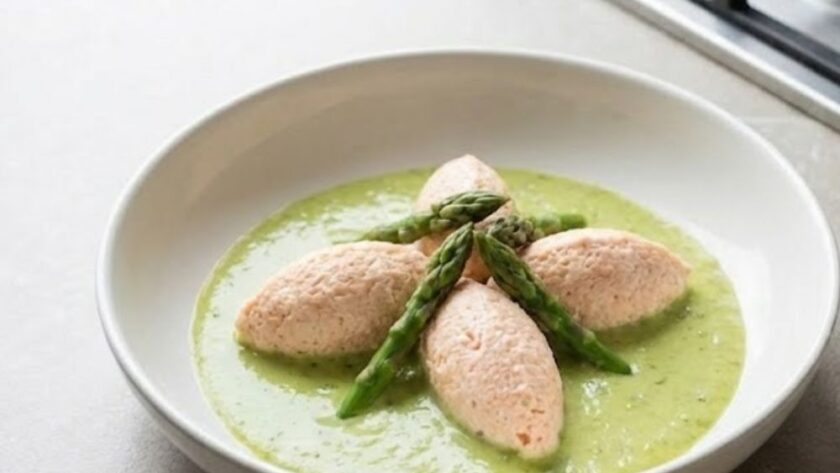
 his Mary Berry Salmon Quenelles recipe is a delicate and elegant dish, which calls for fresh salmon fillet and rich double cream. It’s an impressive dinner party starter, ready in about 2 hours and 45 minutes (including chilling time).
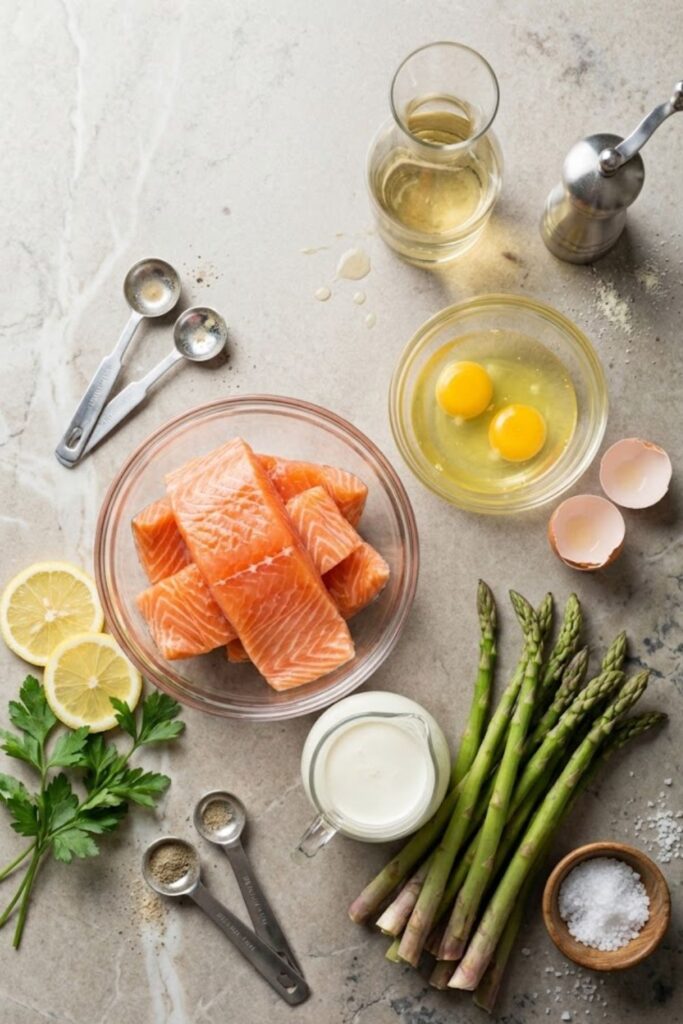
Mary Berry Salmon Quenelles Ingredients
For the Quenelles
- 500g (1 lb) salmon fillet, skinned, boned, and cut into chunks
- 2 egg whites
- 150ml (¼ pint) double cream
- Salt and white pepper (to maintain the color)
- Lemon slices and flat-leaf parsley sprigs, to garnish
For the Asparagus Sauce
- 90ml (3 fl oz) dry white wine
- 250g (9 oz) young asparagus, trimmed and woody parts removed
- 300ml (½ pint) double cream
How To Make Mary Berry Salmon Quenelles
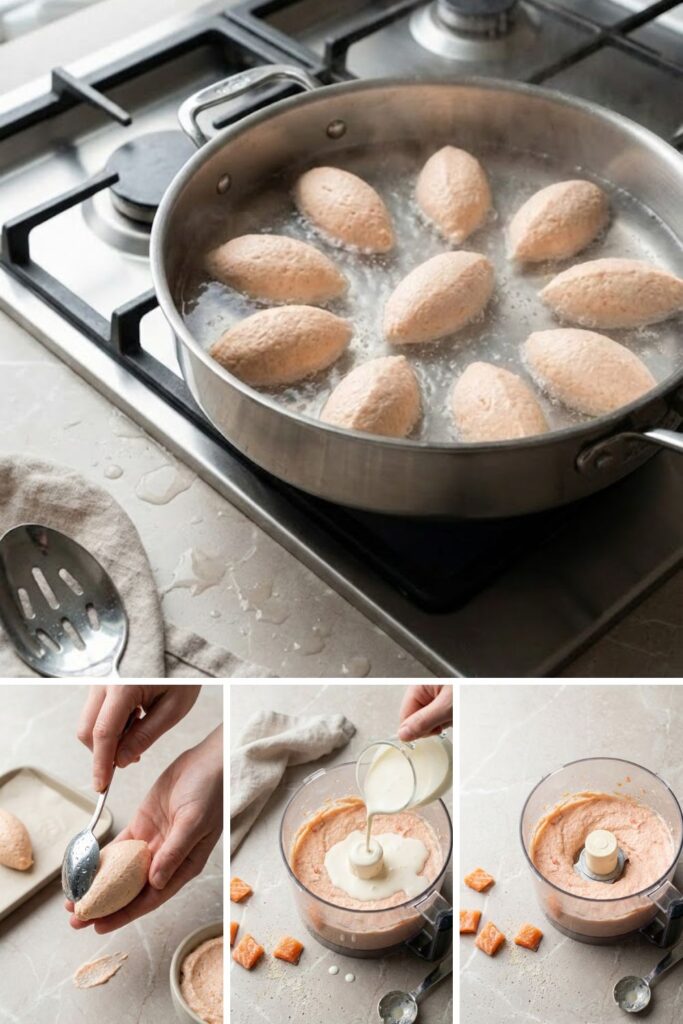
- Purée the salmon: Place the salmon chunks, egg whites, and a generous seasoning of salt and white pepper into a food processor. Process until the mixture is completely smooth.
- Incorporate the cream: With the machine still running, pour in the 150ml of double cream in a steady stream. Continue blending until it is thoroughly blended and smooth. Be careful not to over-process, or the cream may curdle.
- Chill the mousse: Transfer the mixture into a large bowl. Cover tightly with cling film and refrigerate for about 2 hours. This chilling step is essential for the mixture to firm up enough to hold its shape during cooking.
- Shape the quenelles: Bring a wide saucepan of salted water to a gentle simmer. Dip two dessertspoons into the hot water. Take a spoonful of the chilled quenelle mixture with one spoon. Using the second warm, wetted spoon, mold the mixture into a smooth oval shape by passing it between the spoons.
- Poach gently: Lower the shaped quenelles into the simmering water. Cook them in batches (do not overcrowd the pan) for 6–10 minutes. They are done when they are firm to the touch. Remove with a slotted spoon, drain well, and keep warm while you cook the remainder.
- Start the sauce: While the quenelles cook, make the sauce. Pour the white wine into a small saucepan and boil rapidly for about 2 minutes until it has reduced to a thin syrup.
- Prepare the asparagus: Cook the asparagus in a separate pan of boiling salted water for 3–5 minutes until tender. Drain. Cut off the asparagus tips and reserve them for the garnish.
- Finish the sauce: Place the cooked asparagus stalks and the reduced wine syrup into a blender or food processor. Purée until very smooth. In the saucepan, boil the 300ml of double cream for 4 minutes until it thickens enough to coat the back of a spoon. Stir in the asparagus purée and taste for seasoning.
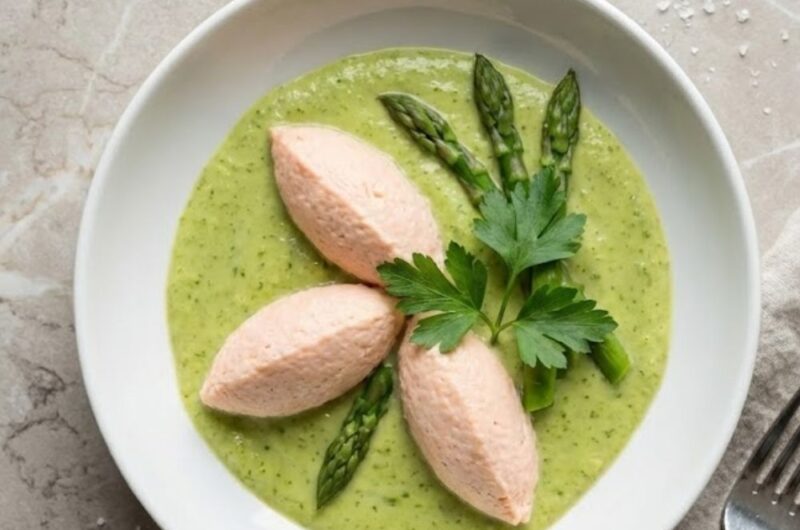
- Serve: Pour the hot sauce onto warmed serving plates. Arrange the poached quenelles on top. Garnish with the reserved asparagus tips, lemon slices, and parsley sprigs.
Recipe Tips
- Avoid curdling: Take care not to overprocess the purée when blending the quenelle mixture in step 2. If you work the cream too hard, it can split and curdle, ruining the smooth texture.
- Why white pepper? Using white pepper instead of black pepper ensures the delicate pink mousse isn’t speckled with black dots, keeping the presentation elegant.
- Shaping technique: Keep a jug of hot water nearby to dip your spoons in between shaping each quenelle. The heat and moisture help the mixture slide off the spoons cleanly, creating a smooth surface.
- Chilling is mandatory: Do not skip the 2-hour chilling time. If the mixture is warm, the quenelles will disintegrate in the poaching water.
What To Serve With Mary Berry Salmon Quenelles
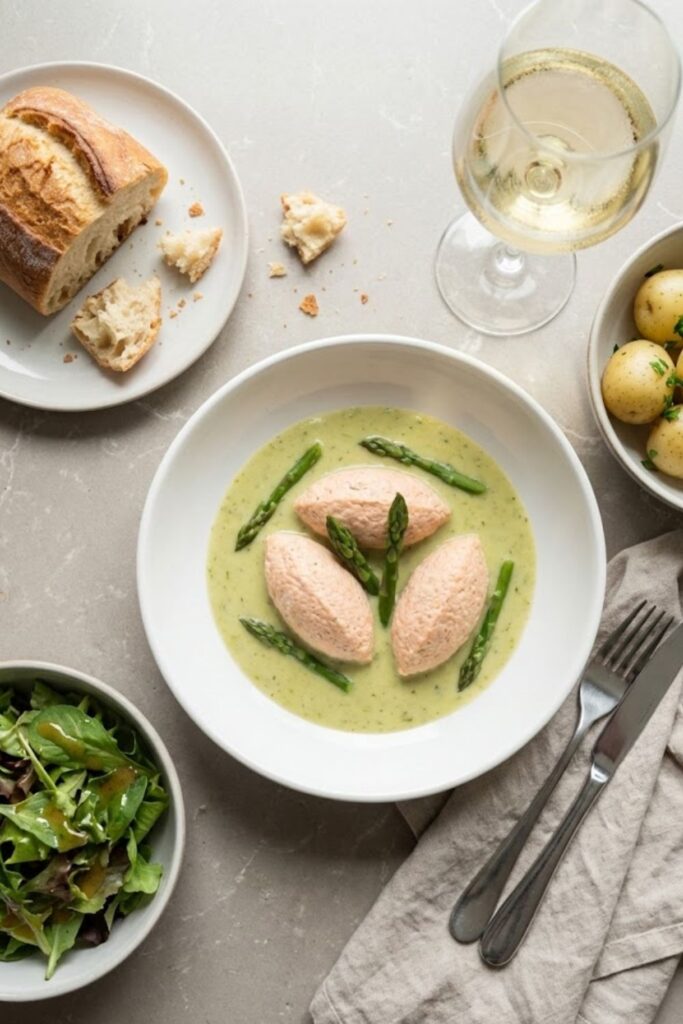
These delicate dumplings are rich and soft, so they need simple accompaniments.
- Crusty Bread: Essential for mopping up the luxurious asparagus sauce.
- Boiled New Potatoes: A simple side if serving this as a main course.
- Crisp White Wine: A Sauvignon Blanc pairs perfectly with the asparagus and cream.
- Green Salad: A sharp vinaigrette salad cleanses the palate.
How To Store Mary Berry Salmon Quenelles
- Refrigerate: You can store the cooked quenelles in the fridge for up to 2 days.
- Reheat: To reheat, place the quenelles in a baking dish, cover with foil, and warm gently in a low oven, or poach them briefly in hot water. Do not boil vigorously.
- Freeze: It is not recommended to freeze the cooked quenelles as the texture can become spongy upon thawing. The raw mixture can be frozen but may separate.
Mary Berry Salmon Quenelles Nutrition Facts
- Calories: 511kcal
- Protein: 22g
- Carbohydrates: 3g
- Fat: 45g
- Saturates: 28g
- Sugar: 2g
- Salt: 0.8g
Nutrition information is estimated per serving (based on 6 servings).
FAQs
Can I use canned salmon?
No, this recipe requires the protein structure of raw fresh fish to bind with the egg whites and set into a mousse. Canned salmon is already cooked and will just fall apart.
What if I don’t have a food processor?
It is very difficult to achieve the necessary smooth paste by hand. You can try mincing the salmon extremely finely and beating it with the egg whites, but the texture will be coarser (more like a fish ball than a quenelle).
Can I make the mixture ahead?
Yes, you can make the mousse mixture and leave it covered in the fridge for up to 24 hours before shaping and cooking.
Try More Recipes:
- Mary Berry Salmon and Prawn Filo Purses Recipe
- Mary Berry Sardine Pâté Recipe
- Mary Berry Three Fish Terrine Recipe
Mary Berry Salmon Quenelles Recipe
Course: DinnerCuisine: FrenchDifficulty: Easy6
servings30
minutes15
minutes511
kcalElegant, light salmon dumplings poached to perfection and served with a rich, creamy white wine and asparagus sauce.
Ingredients
500g salmon fillet
2 egg whites
150ml double cream (for mousse)
Salt and white pepper
Sauce: 90ml white wine, 250g asparagus, 300ml double cream
Directions
- Blend salmon, egg whites, salt, and pepper until smooth.
- Stream in 150ml cream while blending; chill for 2 hours.
- Shape mixture into ovals using two spoons.
- Poach in simmering salted water for 6–10 minutes; drain.
- Reduce wine to a syrup.
- Cook asparagus, reserve tips, and puree stalks with wine syrup.
- Boil 300ml cream until thick, stir in puree.
- Plate sauce, top with quenelles, and garnish with tips.
Notes
- The term “quenelle” refers to the three-sided oval shape, which takes a bit of practice to master with two spoons; don’t worry if they look rustic, they will still taste delicious.
- This dish is technically a “mousseline,” meaning it relies on the emulsification of cold protein and fat (cream) to create a texture that is airy yet rich.
- Keeping the poaching water at a very gentle simmer is crucial; a rolling boil will break the delicate structure of the dumplings before they set.